Jul 3, 2011

Rummaging thru MySpace's wreckage

The old site becomes a 3yo snapshot


As some of you readers are aware, we here at Nanoburgh dabble in the music business. Translation: we produce and promote live concerts, mainly on the low end of the spectrum (100 to 500 attendees per show).

It's more a passion than a business, but it's something we're good at. Over the years, we've put together a perfect streak of excellence on the stage, having hosted many dozens of great acts in a wide variety of genres. We can even brag of having discovered an artist who is now a major star and playing a smaller role in a another of the same. It's all good and it's all fun.

MySpace played an important role in our promotional and talent discovery activities in our early years; say in the 2006-2008 period. MySpace was the buzz, and its roots in music made it the perfect place for us to hang our brand, announce shows, collect a following and keep that tribe up to speed on what we were up to. It worked well.

But come 2009, it was quickly losing its value to us. Do I really need to know what happy hour every cover band in the country was playing? The in-box was flooded with acts trying to get in our loop, but too many of them were kinds in a basement. The bands outnumbered the fans, and the promotional aspect of the service was disappearing. By early 2010, our page was pretty much abandoned --- as it seemed everyone else's was.

MySpace is the ultimate boom to bust story of the Net. It was just sold for $35 million, a far cry from the $580 million that NewsCorp paid for it. At a recent powwow with some of my business pals, the question was posed as to "what would you do if you were handed the keys?". None of us had a good answer.

Every few months, I log into the old account, just to see if I am missing anything. I never am. But I always fail to completely shut down and delete the account. 2,000accumulated friends is why. That, plus the hope that someone has an answer to that question that my own posse failed to deliver.

But rummaging through the old contacts, artist and fans as well as reading the old messages and bulletins is kind of like hitting the Wayback Machine and going back in time. It also shows how fluid people's live and their relationships can be.

I see bands and solo artists that are no longer active; casualties of the most unfair business int he world and forced to give up their dreams and enter the 9 to 5 door. I find devoted music lovers who used to come to all of our shows and became friend as a result, but have since moved out of the area of are in a different state of mind where hitting a rock & roll concert on a Wednesday night just doesn't jive anymore. Our former interns and helpers pop up here and there, as do press and radio people we lost track of, college kids that use to beg their way into shows and are now scattered all over the world, and yes--even a couple of flames as well. All of it is a bit, well: sad.

Saddest of all is one particular trail that can be followed in the old site, that of a pretty cool and quirky band whole original tunes and on-stage sprit I thoroughly enjoyed when they played for me a few times. I can still read the buzz that was generated at those early shows, with their large local contingent of hometown friends that were along for the ride yakking back and forth. Then I can observe how it all started to fall apart and the gang lost their cohesiveness and the shows became less of a big deal to many of them. Relationships split and people moved away and the band's upward trajectory stalled as the party stopped. It came to a final crash ending with the leader of the group passing away; much, much too young. It makes me wonder whether each and every member of that extended gang is even aware of that tragedy of their former ringleader?

It's all there to discover, follow and interpert; almmost like an Eqyptian tomb. RIP MySpace. RIP 2008.

Jul 2, 2011

Losing the blinders


Local media and racing fans need to see bigger picture


The thoroughbred horse racing industry has its share of problems. If it were to be a single business entity, the standard "these conditions raise substantial doubt about its ability to continue as a going concern" clause that is seen in the financial statements of troubled companies would appear in theirs. Anyone involved in racing knows there are problems, and most are willing to lend thought and suggestions to fixing them.

But many in the Saratoga Springs area don't want any part of that messy conversation. After all, the local summer meet at the Old Course on Union Avenue is the most successful in the land. If it works here, that must mean it works everywhere -- or so the thinking seems to go. Living in such a vacuum is convenient and soothing. Who needs the real world?

The Saratogian newspaper -- long one of this column's favorite whipping boys -- plays right into this mix by failing to offer a forum for a big picture look at the myriad of problems out there. Yes, it will publish who/what/where stories on some noisy subject matters of the sport; and yes its racing columnist will occasionally be allowed to rightfully rant about some injustice. But for the most part, it seems to have as its policy one of "don't rock the boat" and "don't stir the natives" when it comes to the soft white underbelly of racing-related issues and developments.

Case in point is Saturday's simple what's happening soon story titled Celebrity Chef Bobby Flay to headline gala benefiting Thoroughbred Retirement Foundation. Now there's a headline that needs to be shortened. But that's not the point. Nor is the fact that a background story on the fate of a similar (but now gone) annual event's originator might be of interest to the reader (hint: the Bernie Madoff affair).

Instead, this story highlights how this newspaper -- the daily rag of the city of the nation's greatest race track -- has no real commitment to filling that very role. Let's point out two examples from the story mentioned:

- Claim: "More than 3,000 thoroughbreds per year retire from America’s racetracks and need new homes and second careers."
- Fact: This figure does not add up. Given that up to 30,000 thoroughbreds are born each year, the writer's number could be off by a factor of 10.


- Claim: "Some tracks such as Philadelphia Park, Suffolk Downs and Finger Lakes have full-fledged retirement programs. Retirement isn’t as much of an issue at New York Racing Association tracks, including Saratoga Race Course, because they typically have higher quality horses that quite often go to breeding programs when their racing days are over."
- Fact: Retirement is very much an issue at NYRA. The statement inferring that Saratoga's quality-driven bloodstock results in more of them going to post-racing breeding careers is not-quite correct. While the female component might see a 40-60% transition to becoming race mares, the male population is nowhere in that territory. I'd be surprised if the figure was north of 2 or 3%.

Nitpicking? Maybe. Whitewashing? Ditto. But the foregone conclusion here is that these two example highlight the paper's unwillingness and/or inability to see the bigger picture of what's really going on on the wider world of racing. It also just might be a good mirror of the general local populace's shortcomings on this matter as well

RM


NOTE: this viewpoint is not meant to be an attack on the author of this story. It is my understanding that the gentleman is fairly new to the city and is not, in fact, part the paper's Sports Department. But he is being asked to 'cover' what is basically a sports story. There lies the problem, but one that is so very common in today's news journalism world: young reporters being asked to greatly widen their coverage areas and workloads because of the dire business straits of the firms for whom they are employed. It is no wonder that these young men and women typically serve very short terms before they leave the field of journalism entirely.

Jun 29, 2011

NY racing's greatest scam

Dr Mark Gerard died yesterday. That name won't mean a thing to most readers. But to anyone with an interest in either the sport of horse racing or the sport of scam-making, this guy was a true gem.

Mr Gerard was a race track vet in the 60's and 70's, rising to the apex of his profession. Now, how did he gain that lofty standing? Try these legendary names of the turf: Secretariat, Kelso, Riva Ridge, Canonero II and Carry Back. Yep; he was the primary vet for each of them during their New York careers.

But, that achievement didn't seem to be quite enough for Mr Gerard, He needed more, more, more! So he came up with a grand scam: switch the identities of two race horses (one a plug, one a champion), enter the champ into a cheap race under the plug's name, and push the money across the betting windows for a Big Score. It worked -- to perfection. Well, at least until a phone call was made to racing officials a month later.

So tees up the Cinzano affair.

The great Sports Illustrated writer Bill Leggett wrote a typically fine piece in 1977 on this matter, just when the details were starting to percolate and before it went to trial. Here it is:

================================


Now listen very carefully. This is the story of two racehorses from Uruguay, one the best in that nation's history, the other a $600 castoff. It is the tale of a veterinarian who tends thoroughbreds as illustrious as Secretariat, of an elegant blonde shopping for a saddle horse in Montevideo, of a jockey not famed for his virtue bringing home a 57-to-1 shot at Belmont Park, of workouts in the dark of night, of a dead horse in a town dump, of a $10,000 bet that went wrong and a $1,300 bet that went right. It is the case of a ringer at America's most famous racecourse and a $150,000 insurance fraud. READ THE COMPLETE ARTICLE

Jun 26, 2011

Saratoga's drinking problem: it's all about the juice head magnets

Earlier Closing Time is Not the Solution

But it IS Time for an Adult Conversation


Another Saturday night, another drunken brawl in the Saratoga Springs bar district . So went the downtown action last evening. This time, four city officers were injured during the festivities.

The squawk box signaled for a squad to attend a full-out melee that was going down in the upstairs joint at #30 Caroline Street called Club Shadow. That initial call came in shortly after 3AM.

But this particular group of rowdies was not content to mellow out once the uniformed civil safety servants showed. On the contrary: the officers themselves became targets as all hell continued breaking loose. Eventually, the leading combatants were herded downstairs and into the street, but that just made matter worse as the expanded arena encouraged more players to join in the action; and that they did. The entire overnight shift of the SSPD was not enough to quell the turmoil and a mutual aid call went out to neighboring agencies, who responded in haste. A seasoned observer likened the scene to the recent Vancouver hockey riots.

A few arrests, a few hospital visits, a little extra overtime to wash away the blood and sweep up the broken glass --- and everything is back in order and up and running to serve what should (hopefully) be a smaller and better-behaved Sunday night sampling of our modern day Leisure Class.

Meanwhile, the chatter bugs of the Spa City's wise & reasoned elite are expressing their usual outrage over this development -- and rightfully so. But, as seems to be the norm in this once great city in the foothills of the Adirondacks, stupidity breeds more of the same.

As could be predicted, the prevailing suggestion as the recommended course of action is the usual call to roll back the closing time for drinking establishments. Last call at 1AM! Midnight! 11PM! One online forum even has a suggestion of 7PM -- with no hours at all on Sundays. We could detour here into an account of the latent Puritanical ethic of the city's supposedly liberal-leaning new immigrant population; but we'll refrain from such an exercise and concentrate on the direct matter at hand.

But first, there should be a consensus that Saratoga has, indeed, worked itself into a dilemma and has a pressing problem. Granted, a seasonal tourist town with a rich and colorful history of gambling, rum-running and mob ties will have the associated art of drinking built into its collective DNA. Gin mills have long been an important part of the city's social and economic fabric, professionally serving visitors, Skiddies and hometown natives, decade after decade.

Fast forward to the modern hour, however, and that three-way balancing act has gone down the tubes. Skidmore students (or their pursuers from nearby colleges) are not the problem: the 18yo drinking age, combined with an aversion to the downtown scene, has taken this group pretty much out of the picture. The same can be concluded for the resident population: the city's aging demographic population is not apt to ring up their pals for a quick pop down at the Tin & Lint.

The constituency that has tipped the apple car is the out-of-town faction, both in its size and its scope. But it's not the usual supsects --the racing season glitterati -- that is the problem. Instead, it is a more recent player on the scene that is to blame.

One must recognize the fact that Saratoga's party season has been extended in recent times. What was once the August Place to Be is now the Summer Place to Be. The compact and manageable four-week sprint of cty mayhem has now been extended into a summer-long marathon, starting around Derby Day and continuing into the nights when the cool Canadian air begins to make its presence felt. The season no longer is defined strictly by the race meet; rather the race meet is but one portion (albeit it a critical one) of the local cash register window of opportunity.

The reasons for this trend (The I Love New York campaign, NYRA's downstate vs upstate fortunes, aggressive local marketing, etc) have been pointed out in this forum previously. These and other initiatives set the steamroller into motion, and the doors to the city as a summer-long party spot were flung wide open. Demand (cash carrying visitors) pushed the action, and Economics 101 kicked in and the Supply side of the equation (more and more social establishments opening for business) responded.

The other phenomena worth mentioning is the WHO behind this mob onslaught of party animals. Whereas in the 100+ years prior the key component of this constituency was out-of-state race-track related folks, for the past three-plus decades they have been dwarfed by a more regional (35-mile radius) demographic. So, whereas Saratoga was Ground Zero as the August home of the national thoroughbred crowd, it is now not only that but it is also the Bar District for the entire Capital Region.

There lies the problem -- if, that is, one considers violence, public drunkenness / urination / puking, excessive noise and a mob mentality to be a problem. If you don't, I suggest you ring up someone that lives within five blocks of The Gut to hear their opinion of the matter. (For kicks: follow that up with a call to anyone living near Siro's).

But don't go running to any of the local professional organizations for help: the Chamber of Commerce is only concerned with commerce, and the Downtown Business Association is only concerned with business. Neither one has Quality of Life as a primary mission component. City officials will likewise be hesitant to take such a call; sales tax receipts and parking fees are the key to the mint, after all, for the representatives of a population imprisoned by their mortgage and scared to death of their next property tax bill. Not to mention the high rents that can be enjoyed by their political backers. Nightly mayhem? Bah: chalk it up as collateral damage for a greater good. So goes the attitude, anyways.

So what we have it this: a virtual anything goes bar zone has arisen with the implicit blessing of the city's political and business classes. Within that footprint exists a disproportionate number of bottom-feeding establishments catering to the worst subset of the Capital Region's youth. I speak, of course, of those places seeking to attract the Hip Hop Nation and the DJ Culture to their joints; branding themselves with the usual keywords of "upscale lounge," "VIP sections," "table and bottle service," 'sophisticated clientele" and so on. Look 'em up; there must be ten of them.

Who, then, walks into these places on a Saturday night in June? Let's paint this ugly picture: buffed-up twenty-something juice heads from the outlying region who spend their days lifting iron followed by two hours in the bathroom getting prettied-up for a night of kicking ass and grabbing chicks.

Upon arrival, the dialog with like-minded strangers centers around "what gym do you go to?" and "where did you get that ink?" that soon evolves into deep intellectual conversations on "did you just look at my girl's tits?" and whether Party A showed proper respect for Party B. Add to the mix the Crips & Bloods bangers from Schenectady up for a night of meeting suburban girls with Daddy issues, and the setting is ripe for action. All while the DJ with his hat on backwards spins those mind-numbing sample beats he lifted from somebody with actual talent as the door staff is frisking the entering clientele for iron and lead.

Saratoga's problem is not 'bars' or 'nightclubs' -- it is bars or nightclubs catering to the element described above. Need proof? Tell me how many 50-person fights ever broke out at the Parting Glass in its 20+ years of existence? Repeat that exercise for 9 Maple Avenue or countless other long running venues. Heck, you can even toss Putnam Den into the mix: they, too, cater to a young crowd -- but they are well behaved and never has there been a problem of the scale we just witnessed at this bottom feeding pit called Club Shadow over the weekend.

Likewise, a rollback of Closing Time is hardly the answer. Such a law would be applicable to all places; and we just saw how the problem is not a universal issue. In addition, logic would conclude that disbanding the total concept of a closing time (i.e., let bars stay open 24 hours if they so choose) would likely be a better detriment to "it's almost closing time, I'd better get my drink on now before it's too late" mentality.

But all of this is too complicated for our collective "gimme the solution in one sentence or less" attention span. Your typical Saratogian of today hasn't seen the inside of a bar room in ten years, and has no real stake in the game. "Keep the mobs coming -- just make sure they're gone the next morning when it's time for church or my morning coffee at Uncommon Grounds."

Unless of course, he or she lives within staggering distance of this downtown madness.

I don't know how the city can legally and fairly chase these kind of places out of town. But I sure wish someone would start looking into it.

------------------------------------------

UPDATE:

Here's an actual flyer for Club Shadow, promoting one of their speical event nights. More DJs that one can shake a stick at! Now, remember people: no du rags!


UPDATE 2:

The club's liquor license has been suspended; and its doors shut by ownership as a result. They are hopeful of rectifying that situation. I think we gave them the pathway to getting there.

Our invoice is on its way. Net 10.

The SEO Fraud

I was recently asked to write a column for a corporate newsletter about the 'The Scam of SEO' epidemic -- and had on my Sunday night to do list getting an outline started for just such an article.

Lo and behold, my own incoming reading list alert this AM shows a short article that beats me to the punch and highlights the same themes that I was about to embark on. You can read Why SEO Disgusts Me by Mark Shaefer right here.

I guess I need not run with my re-hashing effort. No sense possibly getting accused of plagiarism, after all.

For a local example of the unethical use of this tool, one look no further than the one and only NXIVM organization; they of the alleged cult-like practices, legal terrorism, blogger threats and other hijinks. Just take a look at one sample (of many) from their current initiative of gaming the SEO airwaves to tilt traffic in their direction -- and an attemnpt to whitewash their rapidly sinking reputation.

Surprised? Me neither.

Jun 25, 2011

Idiots Being Idiots at the Spa

Saratoga is sorely lacking in a locally-centric blog of quality, attitude and a keen awareness.

With the disappearance of i-Saratoga and Disutopia of Saratoga Springs (please guys: bring 'em both back!) and with JT at Saratoga Politics (aka Saratoga in Decline) concentrating his razor sharp focus on the homegrown kookiness known as NXIVM, a destination site for getting a pulse of the city is noticeably absent to those of us that care about such matters.

Into that void slips You Idiot (aka: Idiots Being Idiots in Saratoga). Apparently operating since late '09, this site delivers rapid-fire, cut-to-the-chase, take-no-prisoners observations on the people, places, events and happenings of The Spa City.

Not for the easily offended, but highly recommended by us here at Nanoburgh. Add 'em to your weekly reading list. You'll be tickled pink that you did.

Jun 19, 2011

Clarence Clemons' Weapon of Good

Springsteen didn't quite do it for me at first. Yes, it was the age of albums, but still, one needed the occasional listen from a college station or a neighbor's window to entice a dive into any given artist's LP. But what I was hearing from the first two works didn't give me that incentive. To these choosy ears, it was too piano-heavy, with sloppy engineering and over-the-top lyrics.

Granted, this lad was happily entrenched in his two chosen genres at the time: blues rock and cosmic cowboy. But off to the side, one couldn't help notice the buzz that was building for this mysterious fellow from Jersey with that funny name. Being in the northeast, it was not uncommon to run across old school pals that were singing his praises after their having witnessed a live show. In the Capital Region, one such gig took place at Union College; an event that has taken on mythical proportions locally in the ensuing decades. (Note: a bootleg recording of this show is readily available).

Then, of course, the hype monster kicked in come Born to Run. This turned me off even more, as did the heavily played title track: more of that annoying keyboard work, compressed production and poet laureate wannabe songwriting. No thanks, I said.

But a funny thing happened on the way to the forum. The mass success of the third album made it impossible to tune into a progressive FM station or pay a social visit without hearing its deeper cuts, most of which weren't so bad after all. Yes, the main tune was still annoying as hell (especially after the 1,000th listen), but the other tracks here and on the prior Greetings from Asbury Park and the Wild, the Innocent and the E Street Shuffle surprised with their appeal. Again: back then, the album is what mattered.

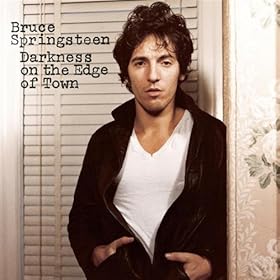
Darkness on the Edge of Town delivered the knockout punch and I was fully on board. Game, set, match.

So I was late to the party; shoot me if you must. The need to see a confirming live show was next on the agenda, and that mission was soon accomplished. We needn't repeat the superlatives on that experience here, for that is an exercise that has been exhausted to the max by many predecessors here and elsewhere -- and all of it is basically correct.

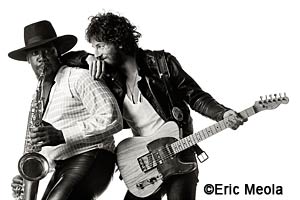
The E Street Band was, in fact, a guitar band, albeit with dual keys adding scope and heroic songs delivered in heroic fashion. Then there was that Big Man standing off to the audience's left.

Clarence Clemons will never be considered a world class saxophonist by any means and the consensus is that Springsteen charted all of his work. But neither of those points should be fodder when discussing his legacy. His having delivered his chosen instrument and his own musical legacy to the rock audience is what counts.

At the heart of the rock era of 1970, the sax was rarely on the radar screen. The heads looked at it as a squaresville relic of the 50's and 60's shit their parents might have grooved on at the suburban cocktail hour: Yakkety yak, don't talk back. Sure, it would pop up nicely in some spaced-out Traffic stuff and the like, but it was relegated by that generation to the history books -- to either Lawrence Welk or those weird jazz guys in the shades.

Clemons, being older than his future band mates, came from that history. He was part of the last pedigree line of the black, Midwest, juke joint R&B acts; they of the bouncy tunes, shiny coats, skinny ties and buckled shoes. King Curtis was his hero. But come the late 60's, work for those kind of cats became hard to find.

The Philly / Jersey scene became a sort of last refuge (at least on the east coast) for that genre, mainly because that region was a half-beat behind the rest of the country, musically. This was likely a result of its being heavily vested in the older doo-wop and Jersey Boys stylings. The Shore continued to supply venues and audiences to guys like Clemons after other 'burghs had shown them the dance hall exits.

But by 1972, the loud and hairy inland freaks like Springsteen were muscling in and the writing was on the wall. Unlike his contemporaries, though, Clemons didn't possess a natural aversion to the heavies and his impromptu sitting in session on that stormy night with this headstrong guy called the Boss by his sidemen became the long-running gig that brought his King Curtis yaks to the rock masses.

As the E Street Band finalized its personnel and learned to play together, its shows became that near-religious revival experience for which they are tagged. Preacher Bruce delivered the sermon, relaying the hopes & dreams and trials & tribulations of working and middle class life to the affected gathering. The two and later three-way guitar attacks (Bruce, Steve and Nils) would simultaneously be both beautiful and scary, and that they should because it represented the work of the devil, best expressed through his obvious weapon, the sex & drugs laden electric guitar.

But to the rescue, each and every night, was Clarence Clemons with his sword of virtue, that symbol of the more innocent times, the old time saxophone. When he soloed with those majestic wails, the guitars faded into the background as if cowering in defeat to a hiding place behind the amplifier stacks. There was a reason the sax solos usually happened after the axe solos: the good needed to prevail over the evil in Mr Springsteen's sanctuary.

Now who else could deliver that good but a giant, trusted ally stationed as his right-hand man? There lie Mr Clemons.

Bruce Spingsteen and the E Street Band's key role in rock music should not be minimized. Recall the time in which they emerged: a competent enough musician from a noisy British band has just released a good times live album recorded in front of a bunch of party animals at Plattsurgh State College called Frampton Comes Alive. Through no fault of that particular gentleman, what soon emerged was the bombastic era of Arena Rock, with glorified bar bands like Kansas, Boston, Seeger and REO Speedwagon paying in football stadiums and dominating radio. Into the void would come disco and rock & roll appeared destined for the nostalgia lounges.


Punk is credited as the savior, having risen from those ashes in the early 80's. But the E Street Band had always been there throughout that darkness--and it was still there at the end. As they became the biggest American band in history, the E Street Band swept along with it a 20-year demographic segment that until this week would still be willing to go to a Bruce revival meeting and who collectively shakes its head in despair when watching its own children and grandchildren bopping to this new plague called hip hop.

Music, like literature, is great because one can reach across generations to be touched by the spirit of those long gone and those we've never known. So it is today with the loss of Clarence Clemons.

So yes; crank up those E Street masterpieces with which we are now so familiar and relive the pure joy of what that rock and roll band did -- and always can do -- for our own individual, current day spirits.

As for myself, I think I will call up some King Curtis on the old Rhapsody service, for the very same reason.


R Millis

Jun 18, 2011

When Racing was King

The New York Times recently dug into its archives and ran a photo essay on NYC thoroughbred racing in the 1960's.

The most interesting picture from the bunch is this one:

Aqueduct 1966 (Image #12)

No, it's not Belmont Stakes Day. Instead, it was simply the meet-ending race card of the autumn Aqueduct meet in 1966.

This was back when racing mattered, and before it became the year-round grind it has now become. There was a beginning and an end to each year; in between the horses either went to Florida to continue running or took a vacation in places like Aiken, SC.

A setting that is gone forever ....

Jun 7, 2011

Dow Chemical Greenwashing Campaign Exposed

Watch the Video America's Largest Chemical Company Doesn't Want You to See

When a Dow Chemical PR firm asked "green" author Anna Lappé to contribute a video about the future of water for Dow's flashy new greenwashing effort called "The Future We Create," she was delighted to provide them with exactly what they had asked for. In her 60-second submission, Lappé stressed that toxic chemicals are one of the biggest global threats to water and people, and that Dow itself is one of the biggest sources of such threats.

The PR company swiftly rejected the video, but asked Lappé to record a new video. She didn't. Instead, Lappé is launching her rejected video today on a YouTube channel that invites videos from the public about the future they'd like to create.

At the same time Dow launches their "virtual conference," the company is actively fighting multiple lawsuits from communities alleging the company has polluted their water—including Dow's own hometown of Midland, Michigan. More information on Dow's history of water contamination, and on organizations fighting for clean water, is available at Lappé's fake www.afuturewecreate.com.


Dow's PR firm did not at first understand why Lappé had sent them a video attacking Dow. "Dow, as a huge corporation with resources, is sponsoring that ["Future We Create"] effort, which you have to admit is pretty cool," a PR rep wrote to Lappé.

"What would be pretty cool," Lappé replied, "would be if the company put even a fraction of the resources it spends on marketing into cleaning up communities whose water it has polluted."

The Yes Lab, a project of The Yes Men that helps activist groups carry out media-getting creative actions on their own, assisted Lappé in developing her response.